


Achieving a sustainable society requires the transition to a circular economy model, moving away from a society based on large-scale resource extraction, processing, utilisation and disposal.
IGES is involved in international processes to support this transition by conducting practical and policy-oriented research activities, as well as promoting technical support and capacity development for waste management, wastewater management, plastic pollution countermeasures and sustainable lifestyles.
Emphasising Global Circular Economy Trends
and Japan’s Role at Domestic and International Forums
Overview
As global efforts to address resource constraints, climate change, and plastic pollution intensify, the circular economy has emerged as a cross-cutting agenda spanning policy, industry, and urban strategy. Against this backdrop, in February 2026, IGES Executive Director, Hiroshi Ono, participated in three major events on circular economy, where he shared IGES’s expertise and presented strategic directions for advancing the implementation of the circular economy. His interventions highlighted IGES’s contributions in three areas: measures to address plastics in the tourism sector, the integration of circular economy into urban policy and the SDGs, and the strengthening of cross-sector collaboration.
UNDP Regional Workshop (24 February)
At the UNDP Regional Workshop in Yokohama: “Promoting Circular Policies and Business Solutions to Address Plastic Pollution in the Tourism Sector,” Ono introduced the evolution and key characteristics of Japan’s circular economy policies. Key points included:
- The transition from waste management-centred policies to a sound material-cycle society
- The development and expansion of Extended Producer Responsibility (EPR) systems
- Integrated approaches combining policy and business solutions in the tourism sector
He shared IGES’s accumulated knowledge from policy research and implementation of practical initiatives, contributing to discussions on reducing plastic use in the tourism sector in Southeast Asia.

JICA Clean City Initiative (JCCI) International Seminar 2026 (25 February)
At the “JICA Clean City Initiative (JCCI) International Seminar 2026,” hosted by JICA, Ono delivered a keynote speech titled “Promoting the Circular Economy through Co-creation and Innovation.” Key points included:
- State of affairs related to SDG 12 (Responsible Consumption and Production)
- Emerging global trends since the adoption of the SDGs, including heightened resource security concerns and strengthened supply chain regulations
- The need to upgrade collection and separation systems at the urban level
21st J4CE Public-Private Dialogue and Business Networking Event (27 February)
At the 21st J4CE Public-Private Dialogue and Business Networking Event held on 27 February, Ono reviewed J4CE’s achievements to date and presented its future direction. He emphasised the importance of strategically promoting Japan’s strengths and expanding international partnerships. Key points included:
- Strengthening the international dissemination of circular technologies and business models developed by Japanese companies and industry associations
- Enhancing the J4CE platform to facilitate and operationalise cross-business collaboration locally, domestically, and internationally

IGES’s Role in Advancing Circular Economy Implementation
Through these three engagements, Hiroshi Ono underscored that the circular economy is not merely about improving waste management systems, but represents a broader economic transformation integrating resource efficiency, industrial competitiveness, and climate action.
IGES will continue to support the implementation of the circular economy in Asia and globally through policy research, international dialogue, and the promotion of public-private collaboration.
Related Publications
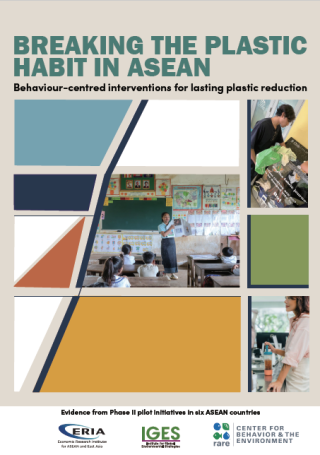

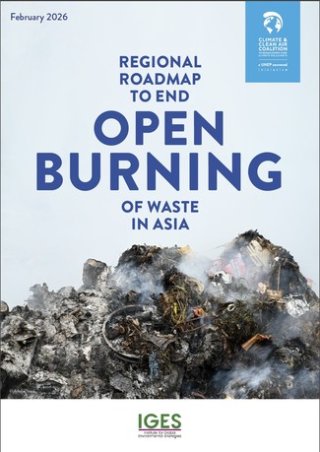

Related Events
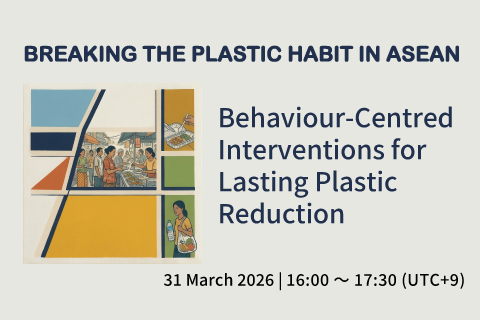
Breaking the Plastic Habit in ASEAN: Behaviour-Centred Interventions for Lasting Plastic Reduction
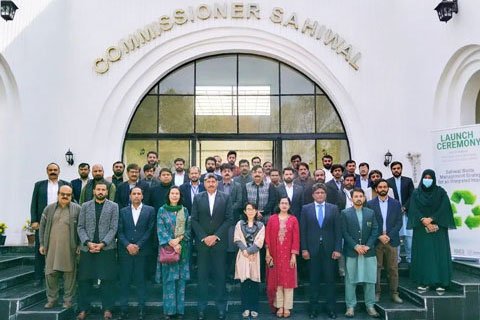
Launch Ceremony of the Solid Waste Management Strategy 2040 for Sahiwal Division

Scaling Behaviour Change: Plastic Reduction from Local Actions to Policy Pathways
Related News

Towards a Plastic Waste-Free Galle City: A Collaborative Journey to Sustainability

Dr. Johan Rockström Visits IGES and Delivers Special Lecture

Six ASEAN partners selected for ‘Breaking the Plastic Habit in Asia’ project (Phase II)
Related Projects
G7 / G20 Special webpage
ASEAN SDGs Frontrunner Cities Programme (SDGs-FC)
